
Action on the opioid crisis
Special Resolution of the 41st Convention of the Communist Party of Canada
The opioid crisis continues to deepen in Canada, with the government reporting 53,821 deaths from 2016 to March 2025.
Research has long shown that drug use dependency is a health issue, not an individual moral failing, but this understanding is not reflected in government policy.
Often, people who use substances and attend emergency rooms are provided only minimal services – typically just a referral to overburdened substance use programs – while being denied comprehensive medical care for their physical or mental health. They rarely receive any social supports to meet their basic needs and are instead discharged as quickly as possible, sometimes directly into homelessness.
Furthermore, most treatment services are disorganized and difficult to access, and often have little to no consideration for trauma, chronic pain or socioeconomic circumstances.
These deficiencies are reflective of a system which fails to address the root causes of addiction, including the role of pharmaceutical corporations in aggressively promoting opioid prescriptions. In 1995, US-based Purdue Pharma began to market the semisynthetic opioid OxyContin to physicians as a safe and effective means of controlling chronic, non-cancer pain. By its own admission, the corporation deliberately misled physicians about the risks of prescribing this drug, claiming that it had little addictive potential. As a result, OxyContin became the first opioid drug to be widely used to manage pain, opening the way for massive over-prescription and resultant surge in opioid addiction.
But addiction also arises from socio-economic precarity, which is caused by lack of affordable housing, unemployment and underemployment, low wages, inaccessible education, poor healthcare support, and others.
Responding to the opioid crisis necessarily includes both immediate, stopgap measures to prevent deaths, as well as more comprehensive action through social and economic reforms. Research shows that opioid and substance use can be treated or managed through comprehensive harm reduction – including “safer supply” as an immediate and temporary measure, overdose prevention sites and Opioid Agonist Treatment (OAT) programs – alongside direct improvements to individual socio-economic stability.
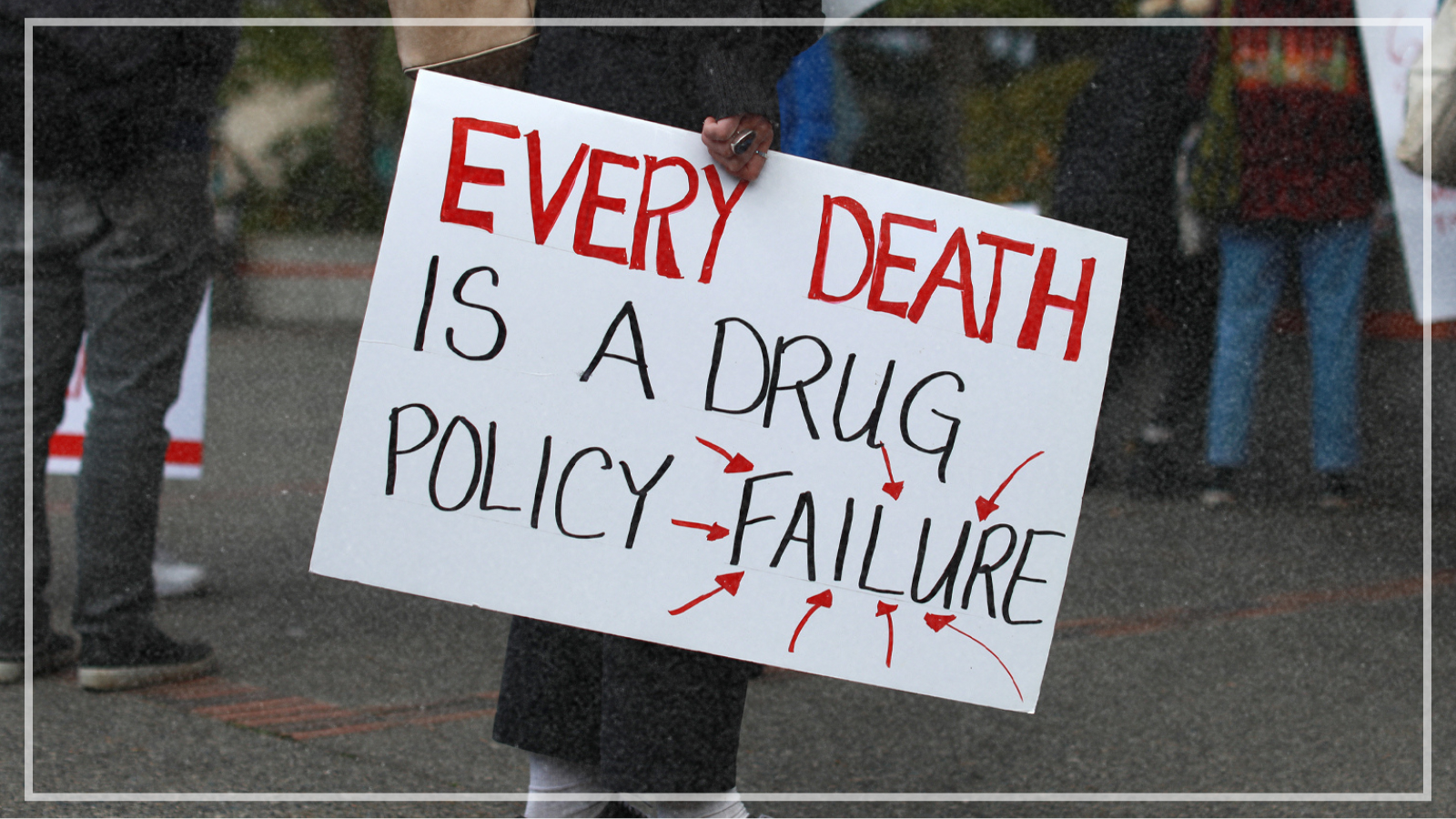
But despite this scientific evidence, governments across Canada are cutting back on immediate harm reduction measures while continuing to implement policies which generate and deepen the social and economic precarity that drives the opioid crisis.
Across the country, OAT programs are underfunded, overly scrutinized and increasingly handed over to be operated by for-profit pharmacies, which extract continuous profit from the daily dispensing of life-saving medication. Immediate, lifesaving public health interventions like safer supply and overdose prevention sites are deliberately restricted. The same political forces which are implementing these cutbacks are also reducing access to education and healthcare, facilitating job loss and wage reductions, and diminishing public services and social programs.
This is precisely why BC’s recently ended pilot project to decriminalize drug use was a failure – because it did not include fundamental and urgently needed supports like housing and job creation. In fact, the lack of those supports has only made the opioid crisis worse in BC.
The 41st Convention of the Communist Party calls on governments at all levels – federal, provincial and municipal – to declare the opioid crisis a public health emergency and to mobilize maximum resources to combat it. This includes immediately maintaining and expanding publicly funded safer consumption and overdose prevention sites, increased public delivery and access to substance use rehabilitation programs, and measures to reduce the dependency on opioid medications for chronic pain management including providing full physiotherapy coverage under public healthcare and public funding for multidisciplinary pain clinics.
To confront the social and economic precarity which underpins the opioid crisis, the Party calls for immediate and comprehensive government action to create and provide affordable housing, to create good jobs with decent wages for all, to expand public healthcare and protect it from privatization, and to provide a guaranteed livable annual income for all.
The Communist Party also calls for the creation of a publicly owned pharmaceutical industry, as a component of expanded healthcare and pharma care, to ensure that drug manufacturing and marketing in Canada are done according to people’s needs, not corporate greed.