
Central Committee Political Report – March 2026
This Political Report was amended and adopted at the February 28th – March 1st, 2026, meeting of the Central Committee of the Communist Party of Canada.
International situation
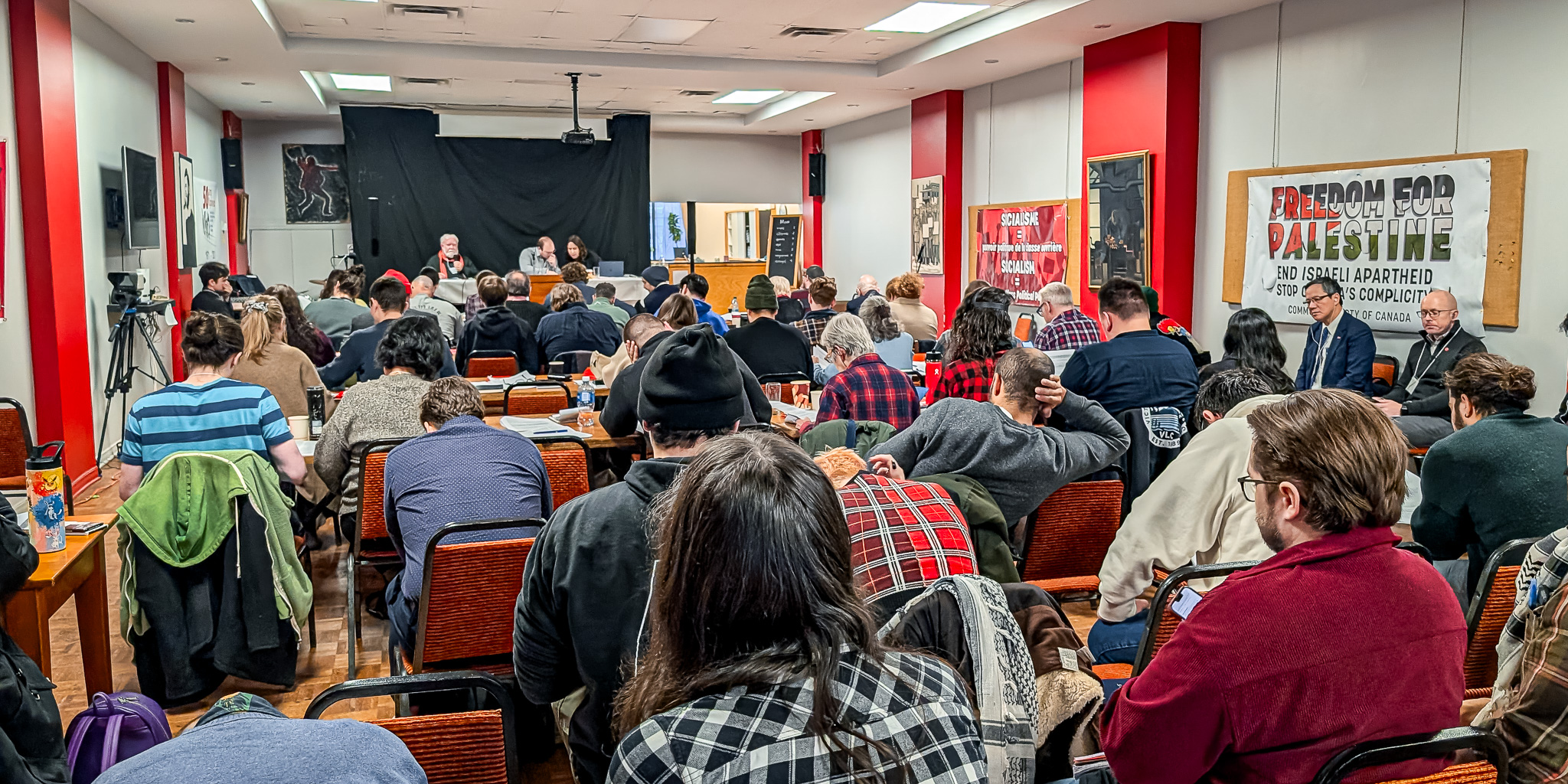
This first full meeting of the Central Committee, held less than three months after the conclusion of our Party’s 41st Central Convention in Montreal, convenes with a clear mandate: to implement the decisions of the Convention. We must transform the political direction of our Convention into the organized activity of our clubs and members. We also meet to assess the fast-moving events of the last three months. These events have tragically confirmed the Convention’s warnings about the descent into imperialist barbarism and war. They are the logical outcome of U.S. imperialism in decline, resorting to ever more desperate and violent methods to maintain its grip. The move to a war economy is well underway, accelerating the drive to militarism and war identified as a central feature of imperialism’s systemic crisis. The rapidly increasing danger of imperialism makes the task of building socialism, as the only lasting alternative to war, exploitation, and crisis, more urgent than ever.
The root cause remains the sharpening of inherent capitalist contradictions. The growing capitalist crisis of overaccumulation, and the rise of new centers of economic power have led the most aggressive imperialist forces to abandon even the pretense of multilateralism. This is most starkly seen in the actions of U.S. imperialism. As our Convention Political Resolution stated, international instruments of domination have given way to the “unilateral methods of ‘weaponized’ coercion”. We are witnessing a move towards the law of the jungle, where the biggest predators use tariffs, sanctions, and now, openly, military force to carve up the world.
The 41st Convention’s assessment of U.S. imperialism’s relative decline is being confirmed daily. In response, the U.S. ruling class, having backed the return of Trump and his far-right “MAGA” movement, has opted for the “iron fist.” The January 3rd, 2026, military attack on Venezuela, the murder of over 100 people including 32 Cuban internationalist combatants, and the kidnapping of President Nicolas Maduro and Cilia Flores, is stark evidence of this turn to military barbarism. This is the Monroe Doctrine being enforced with cruise missiles. This aggression, like Trump’s threats against Greenland, is part of a broader imperialist strategy to secure control over resources needed to fuel the war economy and compete with rival powers.
The U.S. is not only attacking underdeveloped and overexploited countries but is also disciplining its own imperialist allies. Trump’s threats against Canadian sovereignty, his demands to annex Greenland, and the imposition of tariffs are all manifestations of a deep crisis within the U.S.-led imperialist camp. This has given rise to what Prime Minister Carney outlined in his Davos speech: a strategic reorientation by “middle powers,” including Canada. Carney’s speech was not a rupture with imperialism, but a reorientation within it. His message was clear: the old order of U.S. hegemony is crumbling, and for Canadian and European monopoly capital to survive, they must diversify their partners and build new blocs of power. As Carney put it, “if we’re not at the table, we’re on the menu”. This “middle powers” project is a plan for Canadian and European imperialists to get a seat at the head of the table, not to abolish the table itself. It leaves the vast majority of humanity still very much “on the menu,” to be carved up and eaten.
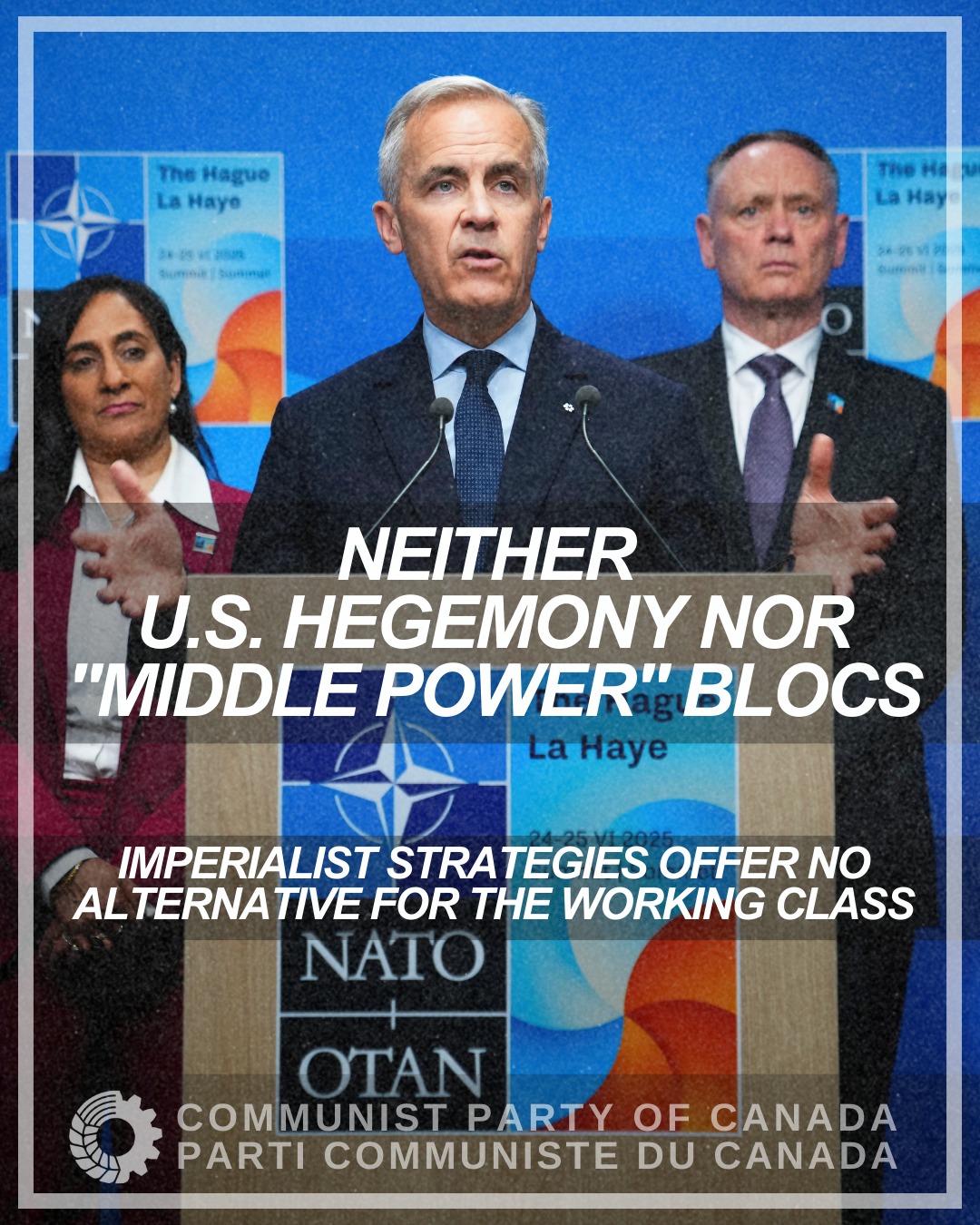
Carney’s outreach to Europe, including this month’s joining of the European defence procurement program, is a concrete example of this rising interimperialist rivalry. The very fact that there is serious discussion within the EU about creating a 100,000-strong European army, as voiced by EU Defence Commissioner Kubilius, demonstrates that the U.S.’s closest allies are preparing for a world where they must project power on their own. This is not a move towards peace; it is a move towards a more fractured multipolar imperialist system, where rival capitalist blocs armed to the teeth compete for dominance.
Carney’s pursuit of a trade deal with China, which was immediately followed by the UK, France and others, must also be understood through the lens of Canada flirting with trade diversification. The China deal is remarkable due to the shift away from Ottawa’s recent close collaboration with U.S. imperialism against China. This collaboration included the politically motivated detention of Meng Wanzhou at the request of the first Trump administration, the parliamentary motion accusing China of “Uyghur genocide,” the imposition of tariffs on Chinese EVs, and Canadian military participation in provocative operations near Taiwan. We welcome any move that lessens Canada’s participation in U.S.-led aggression against China, and we support multilateral, mutually beneficial trade. We must also be clear-eyed: this deal is designed to serve Canadian monopoly capital. Despite a lot of talk about potential auto jobs in the future, it offers no jobs in auto or steel, sectors left to wither by “free trade”. This is why our Party’s demand remains more urgent than ever: nationalize the auto and steel industries under public ownership and democratic control. Only public ownership can guarantee both good jobs and production for social needs, rather than for the profit of monopolies who will move production at the drop of a tariff.
In addition to China, there have been new trade deals with Qatar and the UAE and is working on many more. The Carney government is pursuing plans for a massive new free trade zone linking Canada, the EU, and Pacific nations, portraying himself as the defender of “free trade.” But as Marx explained, “the protective system of our day is conservative, while the free trade system is destructive. It breaks up old nationalities and pushes the antagonism of the proletariat and the bourgeoisie to the extreme point.” From a working-class point of view, the point is not to choose between tariffs or free trade deals. Both serve capital. What matters is breaking the power of capital itself.
While Canada and Europe are looking to diversify trade and are increasingly in conflict with the Trump administration we must not overstate these developments. So far there has been no major rupture in the U.S.-NATO camp. China is the main “emerging peer competitor” identified by U.S. strategists. Marco Rubio’s recent speech in Munich, which openly praised European colonialism and the supremacy of “Western culture” while railing against communism, was welcomed by European elites as an olive branch. This demonstrates that, despite tactical disagreements, the transatlantic imperialist alliance remains intact for the time being, united by maintaining their place on the top of the global system of exploitation from which they all benefit.
Sovereignty cannot be built by subordinating our foreign and military policy to an imperialist war machine. In the face of this escalating imperialist aggression, the struggle for sovereignty – for the right of all peoples to determine their own future – is more important than ever. It is a struggle against U.S. aggression against Canada, but also against the complicity of the Canadian government. While Carney talks of protecting Canadian sovereignty, his government continues to purchase F-35s from the U.S. It is impossible to square Carney’s claim of protecting Canadian sovereignty with his simultaneous plan to triple military spending and deepen integration with NATO, which remains, fundamentally, the U.S.’s global army under the direct command of the U.S. military.
The increased aggression of imperialism is tearing apart the already fragile framework of international law and the United Nations. The U.S. attack on Venezuela is a flagrant violation of the UN Charter. In the face of leftist critiques that dismiss the UN and international law as mere tools of imperialism, our Party must firmly defend the principles of international law: the sovereign equality of states, the right to self-determination, non-intervention in internal affairs, and the peaceful resolution of disputes. The UN was founded in the aftermath of a war against fascism and reflects the more favourable correlation of forces at that time. It is also true that the UN reflects some of the imperialist ambitions of its founders and after the overthrow of socialism in Europe, the UN was further compromised. However, as the 41st Convention documents note, these institutions and agreements, despite their weaknesses, have “helped to prevent – at least in part – the world from sliding into the ‘law of the jungle’”. Even within its current limitations, the UN has provided a platform to advance the rights of Indigenous Peoples through the adoption of the United Nations Declaration on the Rights of Indigenous Peoples (UNDRIP). Another example, the annual votes at the UN General Assembly, in which the overwhelming majority of nations—165 in 2025—consistently condemn the U.S. blockade on Cuba, serve as a vital expression of global solidarity and help isolate U.S. imperialism, even if they lack the power to end the blockade. The fact that the U.S., Israel and others are now actively tearing down these institutions, ignoring UN General Assembly resolutions, and attempting to replace the UN with the proposed “Board of Peace”, proves that the UN remains an obstacle to their unbridled aggression. Our task is not to cynically dismiss international law, but to fight to defend its principles of sovereignty and non-intervention, and to struggle to democratize and transform the UN into a body that truly serves the peoples of the world, not the imperialist powers.
We must point out the blatant hypocrisy between Carney’s call for Canada to uphold international principles of sovereignty against coercion and Canadian imperialism’s deepening complicity in U.S. led aggression. For example after the U.S. attack on Venezuela and now Iran, the response of the Canadian government was an act of complicity. By immediately reiterating Canada’s non-recognition of the Maduro government at the very moment of the U.S. attack, Carney and Anand provided political cover for the aggression. This is consistent with Canada’s regime-change policy since 2019, a policy that makes it a partner in crime.
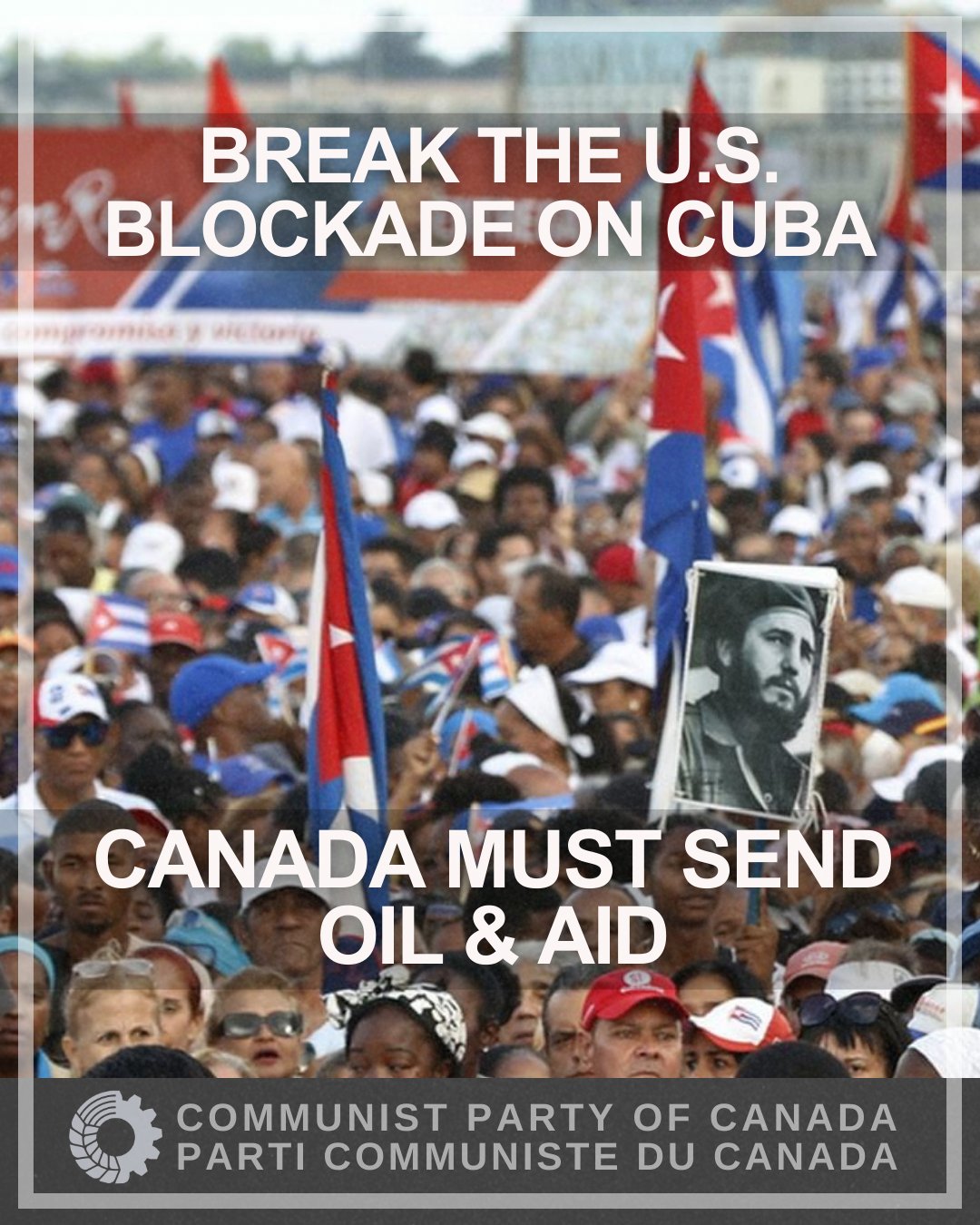
On January 29th, the Trump administration escalated its 65-year war on Cuba, imposing a total fuel blockade. The goal is singular and clear: to destroy the Cuban Revolution through starvation and economic terror, to wipe out the example of a socialist society 90 miles from its shores. Cuba, which has shown the world the deepest internationalist solidarity by sending doctors and teachers across the globe while itself under blockade, now urgently needs our solidarity. We must demand that Canada condemn this illegal blockade and send oil and aid to the Cuban people. There are millions of Canadians with ties to Cuba who can be brought into the fight and it should be made clear that the defence of Cuban sovereignty is the defence of sovereignty everywhere. Canadian oil is largely owned by U.S. corporations or companies that do business in the United States, and these corporations fear U.S. sanctions if they supply Cuba. This demonstrates once again that public ownership of energy and natural resources, under democratic control of the Canadian people, is a key component of real sovereignty and the ability to pursue an independent foreign policy.
On the morning of our Central Committee meeting, the United States and Israel launched a bombing campaign against Iran, a flagrant act of aggression that risks setting the entire region ablaze. This attack, resting on the same kinds of lies that prefaced every imperialist war, is a brazen violation of the UN Charter. While we stand in solidarity with the Iranian people’s democratic struggles against the reactionary theocratic state, we condemn in the strongest terms any attempt by imperialism to manipulate those grievances for regime change. We condemn Prime Minister Carney’s shameful statement of support for this aggression, which makes Canada complicit. The Iranian people alone have the right to determine their future. Canada must immediately call for a ceasefire, condemn this illegal war of aggression and rule out participation.
Meanwhile, the genocide in Gaza continues. The ceasefire has largely failed, and the slaughter of the Palestinian people by the Israeli regime, armed and funded by the U.S. grinds on. Canada’s diplomatic cover and continued arms shipments via the U.S. make it an active participant in these war crimes. Trump’s “Board of Peace” is a particularly dangerous tool. This is a mechanism for imperialist powers to dismember Gaza, legitimize the occupation, and bypass the UN, imposing a colonial solution on the Palestinian people. Meanwhile, Israel is moving to annex more of the West Bank and threatening to resume the mass bombing campaigns in Gaza. The situation demands more action and especially more organization with the building of the Boycott, Divestment and Sanctions movement across Canada.
We must also extend our solidarity to the people of Sudan, who are enduring a devastating war and genocide. The conflict between the Sudanese military government and the RSF paramilitaries, which began in 2023, has claimed over 150,000 lives and displaced 14 million people. Both warring factions stand against the labour and democratic forces that led the 2018 revolution. This conflict is fueled by foreign powers—the UAE, Saudi Arabia, and Egypt—seeking to control Sudan’s resources, particularly gold. Canadian companies and investors have been complicit in this conflict, working with both sides as war profiteers. The Canadian government has facilitated this through weak export controls and a refusal to sanction those responsible. Critically, Canadian weapons are arming the RSF through the UAE, and Canadian military technology is flowing to the Sudanese military through Saudi Arabia and Egypt. The Canadian government is therefore complicit in the war crimes and genocide taking place in Sudan. We demand that Canada halt arms exports to all countries arming parties in Sudan and investigate arms brokers and Sudanese war criminals operating here.
We need to be honest about the existential dangers facing humanity. One of these growing threats is the threat of nuclear annihilation. The U.S. withdrawal from arms control treaties, from the ABM Treaty to the INF Treaty, and its refusal to renew START, are deliberate steps to make nuclear war “winnable”. The push for the “Golden Dome” missile shield, which Canada is shamefully considering joining, is not a defensive measure but an essential part of a U.S. first-strike strategy. The risk of nuclear confrontation, dismissed by some, is real and growing. On January 28, 2026, the Bulletin of the Atomic Scientists set its Doomsday Clock to 85 seconds to midnight, the closest it has ever been to catastrophe. The organziation specifically cited the impending expiry of the last remaining U.S.-Russia nuclear arms treaty, the collapse of diplomatic frameworks, the return of the threat of nuclear testing, and several concurrent military operations as well as the worsening climate crisis and the un-checked development of AI. We must remember that as long as there are nuclear weapons on the planet, it is only a matter of time before a nuclear catastrophe occurs.
The shredding of international law and arms control treaties by unchecked imperialist aggression has opened the door to dangerous new discussions about nuclear proliferation. In Canada, a signatory to the Non-Proliferation Treaty, there is now a public discussion about acquiring nuclear weapons. Retired General Wayne Eyre, former Chief of the Defence Staff, has publicly commented that Canada should not rule out acquiring its own nuclear weapons to achieve “true strategic independence.” This is a reckless and dangerous idea. A world where nuclear powers race to expand and modernize their arsenals, and where others begin to question their non-nuclear status, is a world where the timeline for a nuclear catastrophe is moved up exponentially. We must forcefully argue that the only defence against nuclear annihilation is global disarmament, not proliferation.
The other existential threat accelerating alongside militarism is the climate crisis, and it too is driven by imperialism. A new study from the Canadian Climate Institute confirms that Canada is not on track to meet any of its climate targets: not the 2026 interim target, not the 2030 Paris commitment, and not the 2050 net-zero goal. This failure is the direct result of what the report calls “a slackening of policy effort over the past year, marked by the removal or weakening of climate policies across the country”. Although the policies of the previous Liberal government were already inadequate, the elimination of federal consumer carbon pricing, the cancellation of the oil and gas emissions cap, and the scrapping of the electric vehicle mandate all demonstrate a government fully subservient to the energy monopolies while militarizing the economy. Even the best-case scenario from Ottawa’s own progress report shows Canada achieving only a 28 per cent reduction by 2030, a fraction of what is needed.
While Canada and the U.S. have become significant outliers in their climate inaction, driven by a government subservient to the energy monopolies, other parts of the world are making strides, however still insufficient. China, for example, now sees 26% of its electricity generated by wind and solar, accounting for nearly 60% of the world’s renewable capacity. This contrast exposes the lie that there is no alternative to the path of climate destruction. The fight for a livable planet is inseparable from the fight against the power of the oil and gas monopolies and the struggle against imperialism and its war economy.
Finally, we must note the domestic situation in the United States. While President Trump’s popularity may be waning as the costs of his policies hit home, the foundations of fascist rule – the fusion of monopoly capital with a reactionary, chauvinist state, the dismantling of democratic rights, the glorification of violence – are being laid. As Dimitrov taught us, the victory of fascism attests to the weakness of the working class, disorganized by class collaboration and the weakness of bourgeois rule through the old methods. Our task, as set by the Convention, is not to form alliances with more “democratic” bourgeois forces, but to build the anti-monopoly, anti-imperialist alliance of the working class and its allies that can be a genuine barrier to fascism. We must fight the growing reaction at home with an independent, class-struggle alternative that offers working people advances, not on the basis of an imagined return to a failed liberal normalcy.
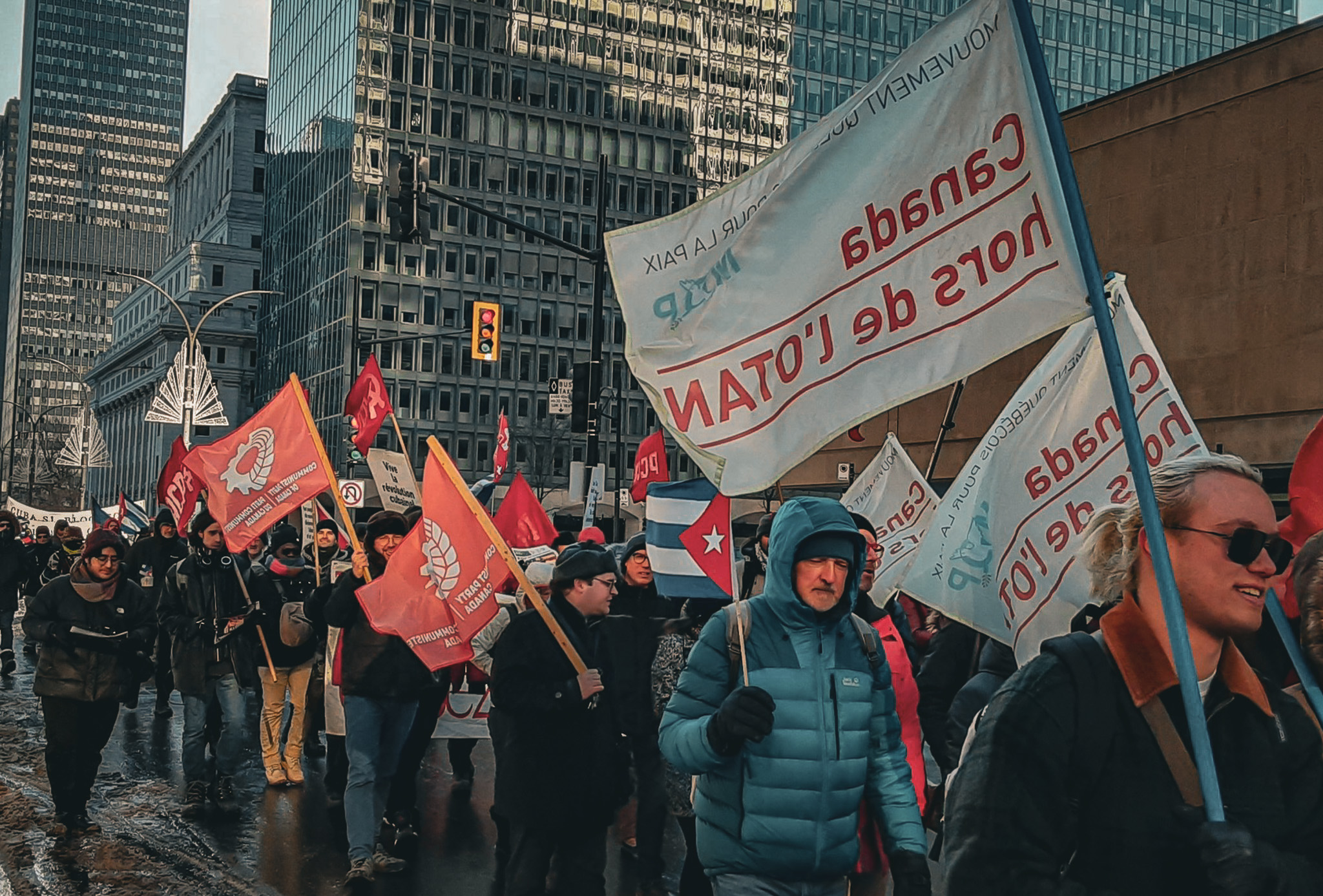
While imperialist aggression intensifies, working people are not passive victims. On February 12, 2026, 300 million workers in India, the largest general strike in history, shut down the country to oppose the Modi government’s anti-worker labour codes. In the Mediterranean on February 6th, dockworkers from dozens of ports coordinated industrial action to stop the flow of weapons to Israel, declaring that “dockworkers don’t work for war.” These inspiring examples demonstrate that the working class internationally is fighting back. They are a powerful reminder that working people in Canada cannot wait for governments or new geopolitical blocs to save them. The fight against monopoly capital must be waged here and now, in solidarity with the working class around the world.
Canada
The domestic situation since our Convention has confirmed the shift to the right that we analyzed. Mark Carney has successfully consolidated the support of Bay Street and his minority government faces a weakened opposition on Parliament Hill. This consolidation reflects a realignment within the ruling class itself: a significant section of monopoly capital that previously backed the Conservatives has, for now, abandoned Poilievre’s party in favour of the Liberals, viewing Carney as a more reliable manager of the capitalist state during this period of imperialist turbulence. This is evidenced by high-profile floor-crossings from the Conservative caucus and enthusiastic support from corporate media and business lobbies for Carney’s austerity and militarization agenda.
The Carney government is using the U.S. tariff threats as the pretext for the deepest austerity drive since the 1990s. While claiming to defend Canadian sovereignty, Carney is dismantling the social programs that give working people what little security they have. His plan to triple military spending—to 2% of GDP immediately and 5% by 2035, amounting to $150 billion annually—can only be financed by slashing health, education, and social services. Federal departments have been ordered to find massive cuts. The goal is to permanently shrink the state’s role in serving people’s needs and expand its role in serving the war machine. As a representative of the banks, Carney sees profits in both the privatization of services and transferring public money to the arms industry for securing business interests abroad.
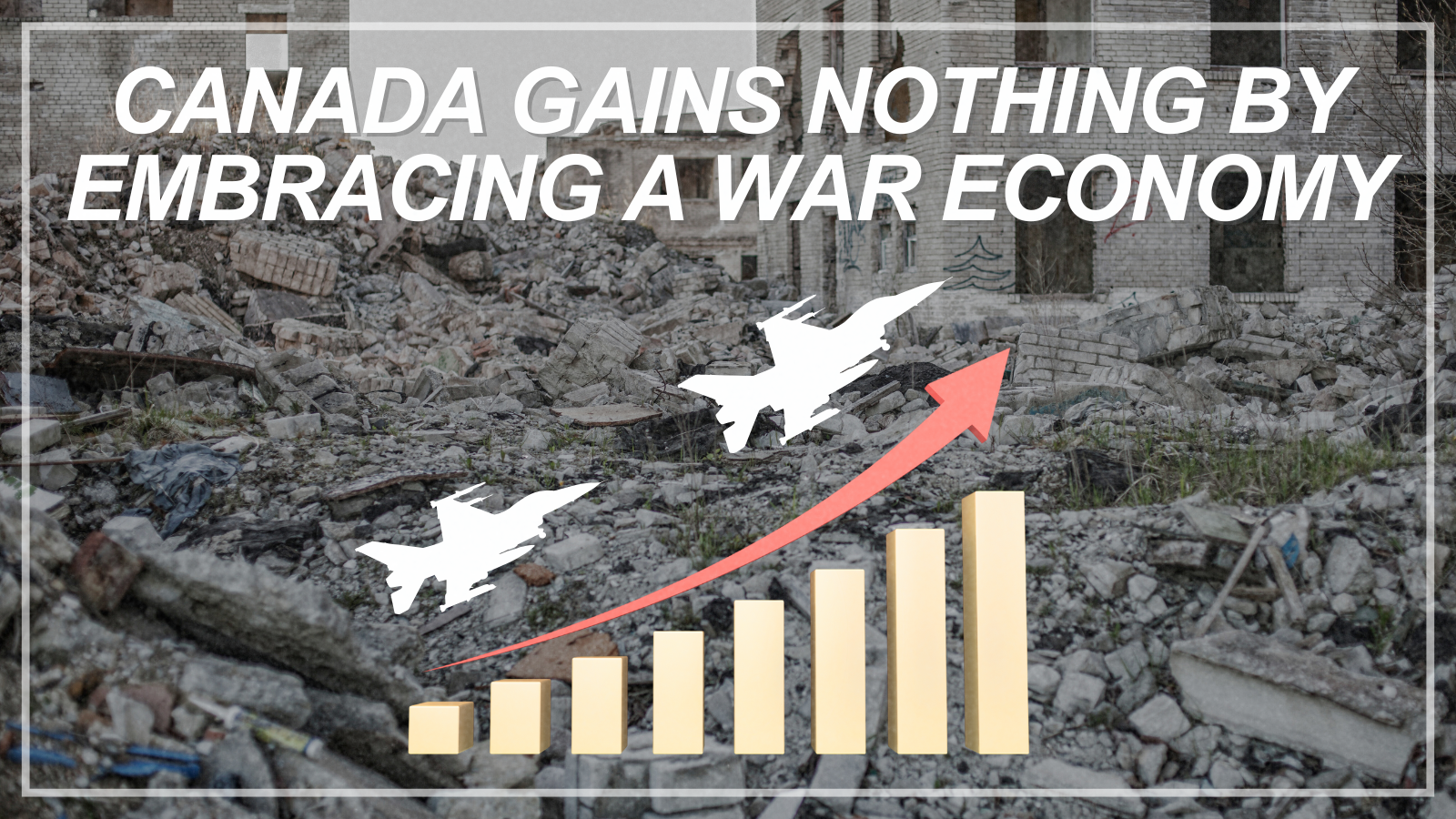
The Carney government’s austerity axe is also hanging over the federal $10-a-day child care program, a program that was already failing to meet its promises. The program is on track to be 90,000 spaces short of its 2026 target, and a staggering 57 per cent of new spaces have been created in the for-profit sector, undermining the public, non-profit nature of the program. The government’s one-year extension deals freeze fee reductions well short of the $10-a-day promise, leaving families with average fees of $19 per day. Meanwhile, Ottawa has refused to provide the capital funding that the non-profit sector desperately needs to expand. The contrast could not be starker: billions for bombs and warships, but not enough to ensure working-class families have access to affordable, public child care.
Carney’s newly announced Defence Industrial Strategy claims it will add 125,000 jobs over a decade. This is a lie designed to funnel massive amounts of public money to private interests. This massive public expenditure will also have an inflationary effect without a negative social benefit. For every $1 million invested in the military, only 7 jobs are created, compared to 14 jobs in healthcare and 20 jobs in education. Military spending is the least effective way to create employment, yet it is being prioritized over the social services working people desperately need. The strategy’s goal of increasing defence exports by 50% also reveals a key purpose: not defending Canada, but opening new markets for arms manufacturers and integrating Canada more deeply into global arms supply chains. However, the rhetoric of a “buy Canadian” strategy for defence is exposed as a sham by the deep integration of our military supply chains. For example, more than 30 Canadian companies are currently producing parts for the F-35 program, most notably Magellan Aerospace, which manufactures the entire tail assembly for the F-35A at its Winnipeg factory. This means that even as Ottawa postures, public money will go towards the U.S. while threatening our sovereignty, locking us further into a U.S.-dominated military-industrial complex. This ramping up of military production will increase the extraction of critical minerals to fuel this war economy and will accelerate attacks on Indigenous land rights, making solidarity with Indigenous struggles for self-determination and sovereignty more important than ever, and tying this work directly to the peace movement.
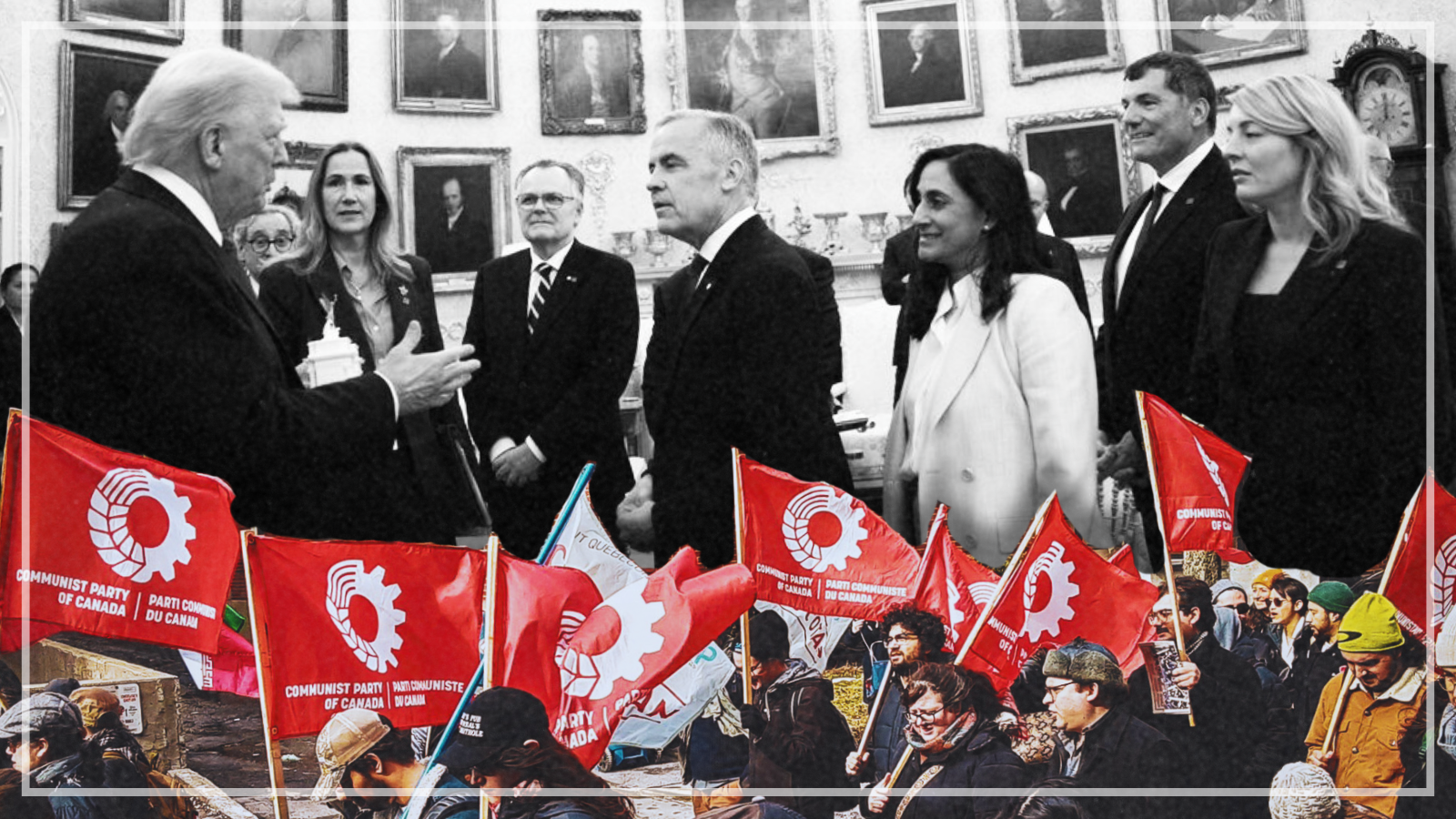
Many liberal and social democratic-minded Canadians have invented their own justification for massive military spending: that it is necessary to defend Canada from potential US invasion. This is a dangerous illusion. The truth is precisely the opposite: the massive increase in military spending was demanded by Donald Trump himself and NATO, which remains under the direct military command of the United States. In his first Oval Office meeting with Trump, Carney thanked the president for being “transformative” and praised his role in securing “unprecedented commitments of NATO partners to defense spending”. The idea that Canada could successfully resist the US military, the most powerful in human history, with which our forces are deeply integrated, is simply out of touch with reality. This illusion is further perpetuated by figures like former NDP MP Charlie Angus, who has supported Department of National Defense proposals for a “citizen army” of reservists. Such proposals are a dangerous distraction at best. At worst, they provide political cover for the drive to a war economy by giving progressive-minded people a false sense that militarization can serve defensive ends. If the Carney government was serious about defending sovereignty, they would be rolling back U.S. corporate power at home and fighting for the respect of sovereignty internationally rather than cheering military expansion. Protecting sovereignty also requires internal solidarity which is based on universal healthcare, education, the right to housing, equality rights and democratic control of our economy. However, these social rights are all being rolled back in favor of military spending.
The melting of the Arctic ice cap, driven by the climate crisis, is transforming the region into a new theatre of interimperialist rivalry. The Northwest Passage is becoming a navigable waterway for a longer portion of the year, and the United States has never recognized Canadian sovereignty over these waters, viewing them as an international strait. Canada’s relationship with the U.S. in the North is thus becoming more like that of Panama: a client state with a waterway the U.S. considers strategic to its own interests.
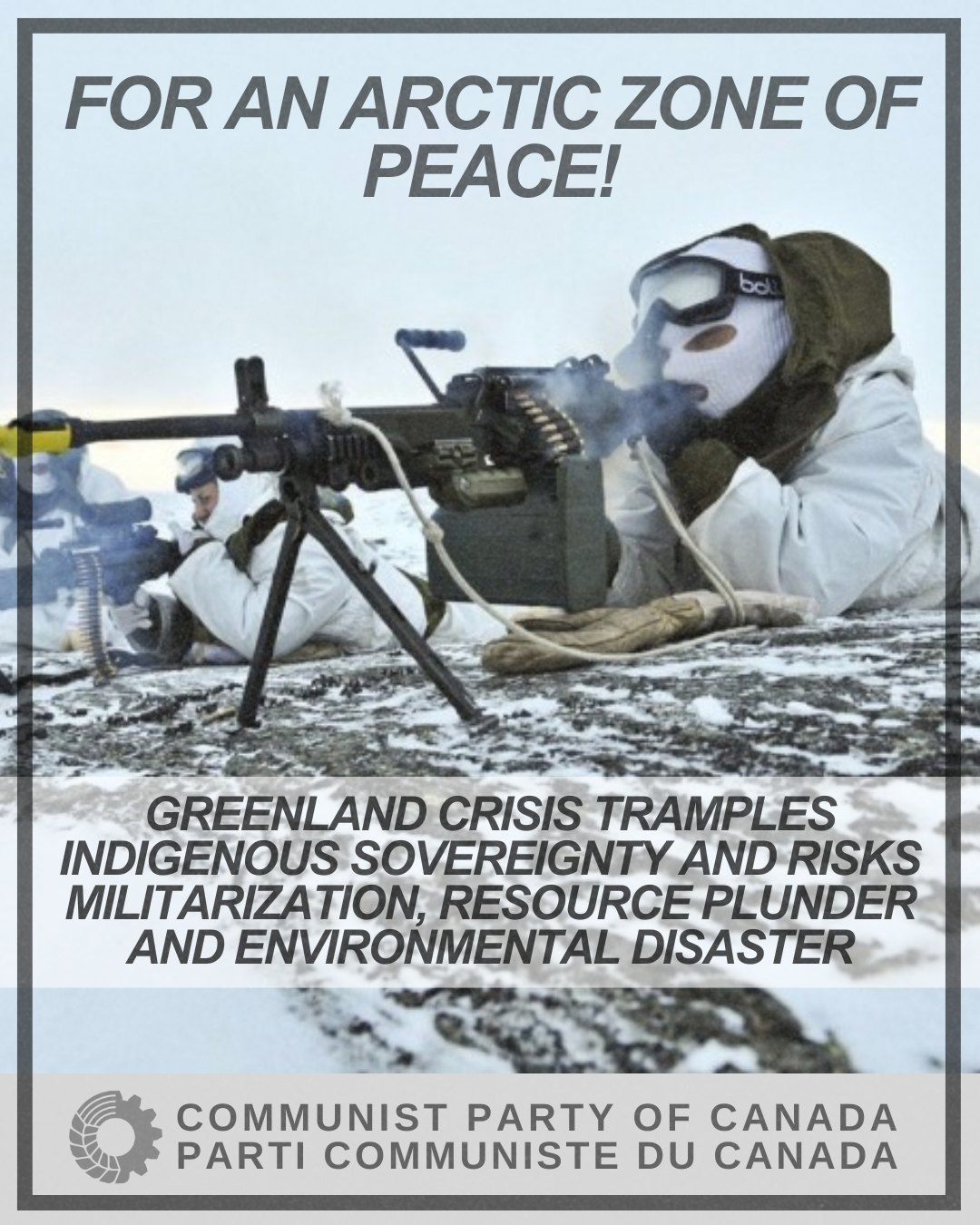
For generations, Inuit and Northern communities have desperately needed infrastructure for housing, clean water, and social services. Instead, the region now faces a massive wave of militarization disguised as development: new military bases, deep-water ports, roads, and 5G networks—all built to serve the war economy and NORAD modernization, not the people who live there. Climate change is hitting the North hardest, with permafrost thaw already sinking roads, destabilizing buildings, and threatening to displace entire communities. What Inuit and First Nations need is not military infrastructure, but real sovereignty: the power to control their traditional lands and resources and to determine their own future. The struggle of the Innu in Labrador, who have mounted blockades and occupations to oppose NATO military exercises on their traditional territory, is a powerful example of the resistance to this militarization and the fight for self-determination.
The austerity drive accompanying the move to a war economy is already having real consequences. Mass layoffs in the public sector have begun with 10,000 federal workers receiving job adjustment notices in early 2026 according to PSAC. These cuts will disproportionately impact women, who make up the majority of public sector workers, and will drive further unemployment and gender inequality. The attack on public services is also a privatization agenda. Healthcare, the most significant gain of the post-war period, is now squarely on the table. The crisis in healthcare is a deliberate creation to pave the way for two-tier, for-profit medicine. We must sound the alarm: the universal, public healthcare system that generations of working people fought to build is in grave danger.
The Carney government’s corporate assault is not limited to austerity but also includes an anti-democratic offensive. For example, buried in Bill C-15, the budget implementation bill, is a provision granting cabinet ministers the power to exempt corporations from any federal law if it is deemed to be in the “public interest” or to encourage “innovation, competitiveness or economic growth”. This is the logical extension of a government that prioritizes the war economy and corporate interests over democracy and the rights of working people.
The Conservatives under Pierre Poilievre remain weak in the polls, having collapsed after Trump’s return when voters rallied to the Liberals out of fear. However, the Conservatives remain a danger. As the Carney government’s austerity measures bite and living standards continue their decline, the anger this generates will not automatically turn left. The Conservatives will be there to co-opt it, offering scapegoating, anti-immigrant racism, attacks on “wokeness” and trans rights, and a phony populism that blames every problem on marginalized communities and “elites” while serving the actual elite: big business.
Their open Trump-style rhetoric and far-right social conservatism has, so far, limited their appeal to a broader electorate. But this can change. The battle for consciousness among desperate working people is urgent and cannot be won by simply being “anti-Conservative.” It requires our Party to be present, offering a clear class-struggle alternative that explains the real source of the crisis: capitalism itself. We must counter the poison of the far right not with pleas to return to an imagined liberal normalcy or merely a defence of the capitalist welfare state, but with a fighting program that unites workers across all divisions against our common enemy: the monopoly corporations and their state.
In Alberta, a form of “separatism” has emerged that reflects the needs of different sections of capital in the face of immediate challenges. This is not a genuine movement for national self-determination but far-right continentalism, whose real aim is to facilitate the annexation of western Canada into the United States. Some forces, including within the United Conservative Party, have flirted with this separatism to win concessions from Ottawa, but the logic of their position leads toward deeper integration with U.S. imperialism, not sovereignty for working people.
Meanwhile, the NDP is in a profound crisis. Its decades-long strategy of trying to “out-liberal the Liberals” has produced demoralization, declining working-class support, and its worst electoral result in history in the April 2025 federal election. The party’s base is shrinking, and its purpose is unclear to an increasing number of workers.
It appears as if a pivot leftward from sections of the NDP is possible in response to this crisis. This has been seen in Europe, where left social democratic projects have emerged after the capitulation of social democratic parties and then have been consolidated back into neoliberal positions, unable to overcome the fundamental contradiction of class collaboration. A left turn within the NDP, while likely attracting some formerly disillusioned activists back into the party’s fold, cannot solve the fundamental crisis of social democracy. The party remains structurally and ideologically committed to working within the framework of capitalism. Our task is to patiently but persistently explain that capitalism, structuring an economic system around the need for profit is the problem, and that building independent working-class political action is the immediate strategy that will build class power. The working class cannot look to parties of big business nor to parties that ultimately subordinate workers’ interests to the electoral strategy of reformism.
The political situation in Quebec is undergoing a significant recomposition with the overall result being a shift to the right and the differences between the right and left narrowing. The most notable features of this has been the resignation of Legault and the decline of the CAQ, combined with the rise of the Parti Québécois under Paul St-Pierre Plamondon. The PQ’s rise reflects genuine discontent with declining living standards under the CAQ government’s long tenure, but channels it into bourgeois nationalism with the accompanying danger of an even deeper integration with the economy of the United States.
The struggle for Quebec workers’ rights and the national rights of the Quebec nation for self-determination up to and including secession must be linked to socialism, not subordinated to a nationalist project that ultimately serves Quebec’s own capitalist class. This is where the Parti communiste du Québec plays a critical role. Having regained its legal status, the PCQ is positioned to run in the upcoming Quebec election for the first time in 26 years and offer a genuine class-struggle alternative to federalism, bourgeois separatism and narrow nationalism which the CAQ has been using in recent years to divide the working class and install far-right ideas. The PCQ also stands as an alternative to Québec Solidaire, which has abandoned the principles of struggle that were at its original creation and now functions as another party of capitalism.
Importantly, the working class in Quebec is not passive. The recent march of 50,000 workers in Montreal, organized by unions against the anti-people measures of the Legault government, is a powerful sign of growing resistance. With promises of more mobilization for May 1st the potential for powerful independent political action is growing.
Fundamentally, what unites all the main federal and provincial parties—Liberal, Conservative, NDP, Green, Bloc, PQ, Québec Solidaire—is their commitment to the capitalist system. They do not advocate for the fundamental changes that would really take on the base of corporate power. Not one advocates for withdrawal from corporate trade deals like CUSMA. Not one advocates for leaving NATO or NORAD, the military blocs that entangle us in U.S. war plans. Not one challenges the massive and growing militarization of our economy.
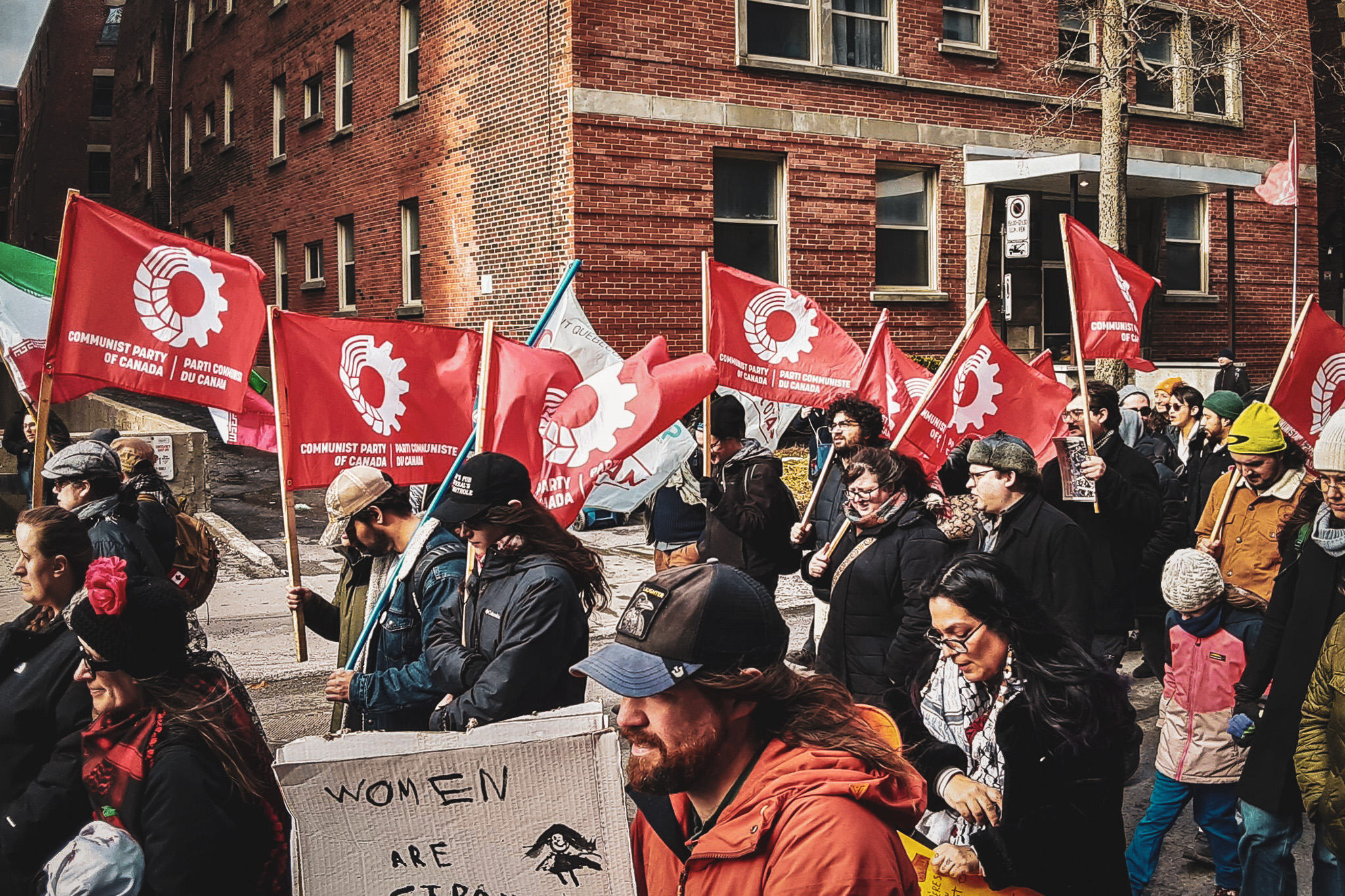
With little to no working class representation in Parliament, the struggle now is almost totally extra-parliamentary. The real alternative to the corporate agenda of war and austerity is a working-class, anti-monopoly, anti-imperialist people’s coalition. A coalition in the streets with a reflection in electoral politics that demands the nationalization of energy and natural resources and key industries like auto, steel, ship building and aerospace under democratic control, to guarantee jobs and production for social needs. A coalition that fights for a full-employment economy, funded by cutting the war budget and taxing the rich. A program that builds two million units of social housing to end the housing crisis. Our task in this volatile and dangerous period is to bring this program to the working class and build the movement capable of winning it.
The fightback
We meet at a moment when the capitalist class feels emboldened to use more repressive measures because of the crises they are trying to get the working class to pay for. The use of the notwithstanding clause by the Alberta government to crush the teachers’ strike is a stark example. This attack on democratic rights and collective bargaining is part of a broader pattern, seen also in the federal government’s routine use of Section 107 of the Labour Code to force workers back to work, from railways to ports to Canada Post. Yet it is possible to stand up to this repression. The Air Canada flight attendants this past summer showed us how. This victory carries lessons for all of us: militancy exists and can win when workers are organized and led by class-struggle trade unionists.
At this moment of massive militarization and austerity, the Canadian Labour Congress is not playing the role required to unite labour against the offensive. There was very little coordinated resistance to back-to-work legislation. There is no national campaign of independent political action against the Carney government’s cuts. There is confusion and silence on war spending, which is no doubt related to the NDP offering no real alternative.
The upcoming CLC Convention in Winnipeg in May 2026 is a critical meeting. The economic and political crisis urgently requires the labour movement to unite with social movements. A strong left caucus is needed at the CLC to mobilize against government spending cuts and the necessarily connected drive to militarization and war.
On the question of trade, the conditions are being created for a mass struggle against the tariffs and Trump’s agenda, which further sacrifices Canadian sovereignty and living standards for the benefit of U.S. capital. The Canadian Labour Congress has recently called for “a workers-first trade policy that preserves and expands Canadian jobs” and have said that no deal is better than a bad one. This framework that sees CUSMA as an agreement that can be fundamentally reformed is insufficient. What is needed is a militant, class-oriented strategy that unites workers behind expanding public ownership, defending supply management, and exiting CUSMA in favour of multilateral, mutually beneficial trade with all countries. This approach can forge the unity required to defend jobs and popular sovereignty. We must fight for trade policies that truly put workers first—policies based on full employment, respect for Indigenous rights, and environmental protection, not corporate profit.
Class-struggle left caucuses within labour that function as a network between conventions are urgently needed. These caucuses can provide a pole for militant class-struggle unionism and advance the perspective of independent working-class political action to combat business unionism and reformism. We must share experiences of struggle through our press, through interventions in labour councils, and through patient, persistent work within our unions. The labour movement remains the decisive front, and we must be present, fighting, and winning the best fighters to our perspective.
The January 29th executive order imposing a total fuel blockade on Cuba demands that Cuba solidarity become a priority for the entire Party. This is an act of economic war designed to starve the Cuban people into submission, to destroy the example of a socialist revolution that has, for decades, shown the world the deepest internationalist solidarity.
We must build broad solidarity now. This work cannot be limited to left circles. There are several million Canadians who have been to Cuba, and many of them have ties to the people there. Furthermore, the unpopularity of Trump and his brand of naked imperialism means that the vast majority of Canadians see the United States as an unprovoked aggressor and no longer hold back in denouncing “US imperialism”. We must reach the labour movement, peace organizations, and the broader Canadian public. We must demand that Canada stand up to the United States, condemn this illegal blockade, and send oil and aid to the Cuban people. The defence of the Cuban Revolution is a global class imperative, and our solidarity must match the scale of this threat.